
Keto vs. Jet Lag: The Metabolic Hack Frequent Flyers Need to Know
How travel fatigue messes with appetite and how the keto diet helps regulate it
If you’ve ever crossed multiple time zones, you know the feeling. You’re exhausted but can’t sleep. You’re starving at 3am but have zero appetite at dinner. Your body feels completely out of whack. That’s jet lag for you, and it’s doing more than just making you tired. It’s actually throwing your blood sugar and appetite hormones into chaos.
Here’s the thing: your body runs on an internal 24-hour clock called your circadian rhythm. This biological timekeeper doesn’t just control when you feel sleepy. It orchestrates a complex symphony of hormones that regulate everything from insulin sensitivity to hunger signals. When you zip across time zones, this finely tuned system gets seriously disrupted.
Your Body Clock Controls More Than Sleep
The circadian system generates endogenous rhythms of approximately 24 hours, coordinating the timing of many physiological processes, including glucose metabolism. Every cell in your body has its own molecular clock, but they all take their cues from the master clock in your brain’s suprachiasmatic nucleus. This master clock syncs up with light exposure, which is why jet lag hits so hard when you suddenly find yourself in a completely different light-dark cycle.
Scientists have discovered that glucose tolerance and insulin sensitivity are lower in the evening than in the morning in healthy individuals. Your body naturally expects to process food at certain times. When jet lag throws off this schedule, things start to go haywire. Research indicates that circadian misalignment can contribute to insulin resistance, where cells fail to respond properly to insulin. This means your blood sugar stays higher for longer.
The problem gets worse because inappropriate sleep duration, late chronotype, social jetlag, and shift work are associated with the progression of insulin resistance. Your pancreas, which produces insulin, has its own circadian rhythm too. Northwestern Medicine investigators showed that a circadian clock in the pancreas is essential for regulating insulin secretion and balancing blood sugar levels. When this clock gets disrupted, your whole metabolic system suffers.
Why You Can’t Stop Eating (Or Can’t Eat At All)
Travel doesn’t just mess with your blood sugar. It completely scrambles your appetite signals. Two key hormones control your hunger: ghrelin and leptin. Ghrelin is your “hunger hormone” that tells you when to eat. Leptin is your “satiety hormone” that signals when you’re full.
Ghrelin is produced by oxyntic cells of the stomach, and circulating plasma levels are highest during periods of starvation, whereas levels are rapidly downregulated following a meal. Meanwhile, leptin regulates the long-term balance between your body’s food intake and energy use.
Under normal circumstances, these hormones work in harmony. But when you’re jet lagged? All bets are off. Acute sleep deprivation reduces blood concentrations of the satiety hormone leptin and increases plasma levels of hunger-promoting ghrelin. No wonder you find yourself raiding the hotel minibar at weird hours.
The disruption goes beyond just feeling hungry or full at the wrong times. Sleep deprivation contributes to the central regulation of appetite by modulating the expression and function of appetite-related hormones including orexin, ghrelin, leptin, and insulin. Your brain’s appetite control centre in the hypothalamus gets confused signals from all directions. The result? Those crazy cravings for carbs and sugar that seem to hit especially hard when you’re travelling.
Enter the Ketogenic Diet: A Metabolic Reset Button
This is where the ketogenic diet comes in as a potential game-changer for frequent travellers. By drastically reducing carbohydrate intake and training your body to burn fat for fuel, keto might help stabilise the metabolic chaos that jet lag creates.
Nutritional ketosis can be defined as the intentional restriction of dietary carbohydrate intake to accelerate the production of ketones and induce a metabolic effect that stabilises blood sugar, minimises insulin release. When you’re in ketosis, your body produces ketone bodies like beta-hydroxybutyrate (BHB) from fat. These ketones don’t just serve as an alternative fuel source. They actually influence your circadian rhythms and appetite regulation.
Research shows that ketogenic diet, probably through its peculiar molecules fatty acids and ketone bodies, may play a role in influencing circadian rhythm. Some scientists believe that being in ketosis might help your body adapt more quickly to new time zones by providing a stable energy source that doesn’t rely on regular meal timing.
How Keto Tames the Hunger Beast
One of the most remarkable effects of ketosis is its impact on appetite. Unlike most diets where you’re constantly battling hunger, keto seems to naturally suppress appetite. Exogenous ketosis reduced hunger and desire to eat, occurring in conjunction with decreased levels of the hunger hormone, ghrelin.
The science behind this is fascinating. Studies show that during ketosis, secretion of the appetite-stimulating hormone, ghrelin, is suppressed in contrast to other forms of diets, which often is accompanied by an increase in ghrelin levels. Normally, when you lose weight or restrict calories, ghrelin levels shoot up, making you ravenously hungry. But ketosis seems to block this response.
Even more interesting, research showed not only the negative association between BHB and ghrelin concentrations during ketosis but also a positive correlation between concentration of BHB and that of other post-meal satiety hormones. In simple terms: the deeper you are in ketosis, the less hungry you feel.
This appetite suppression isn’t just about willpower or feeling full from eating fat. The mechanism whereby ketones could decrease appetite may be via central actions in the brain or by changes to peripheral hormone secretion. Ketones appear to directly influence the brain’s appetite control centres.
Building Metabolic Flexibility: Your Travel Superpower
Perhaps the biggest benefit of keto for travellers is something called metabolic flexibility. The ability to switch between glycolysis and ketosis promotes survival by enabling metabolism through fat oxidation during periods of fasting. When you’re metabolically flexible, your body can easily switch between burning glucose and burning fat for energy.
By prioritising fat breakdown, keto improves how your body uses insulin. Excess body fat, especially around organs, is linked to insulin resistance. Keto tackles this root cause by forcing fat utilisation. This means more stable blood sugar levels, even when your meal schedule is completely off.
Travellers who are fat-adapted often report they can go much longer without eating and don’t experience the energy crashes that come with blood sugar swings. When fueled by carbohydrates, every few hours you need to re-fuel. But when you’re fat-adapted, you have the freedom from the bind of having to eat to a schedule.
☕ Fuel Your Flexibility with the CARNIVORE Travel Mug: Stay metabolically flexible on the go with our CARNIVORE Travel Mug. Perfect for your morning butter coffee or bone broth, this insulated mug keeps your keto beverages at the perfect temperature during long flights and layovers. The leak-proof design means no spills in your carry-on, while the ergonomic handle ensures comfortable sipping during those marathon travel days.
Perfect for: Maintaining your keto routine during travel, keeping your fat-adapted metabolism fueled, and avoiding airport food temptations. The double-wall insulation keeps hot drinks hot and cold drinks cold, so whether you’re sipping bulletproof coffee or bone broth, your metabolic fuel stays at the optimal temperature.

The Circadian-Keto Connection
The relationship between ketogenic diets and circadian rhythms is complex but promising. Caloric restriction induced high-amplitude daily rhythms in blood ketone bodies that correlated with liver ketone levels, and these rhythms became highly connected with the circadian clock.
Some research suggests that ketogenic diets affect the circadian rhythms of behaviour and clock gene expression, potentially helping to reset disrupted circadian patterns. While scientists are still working out the exact mechanisms, the evidence points to ketones playing a role in helping your body maintain its natural rhythms even when external cues like light and meal timing are disrupted.
Limiting food intake to a short time window can cause behavioural and physiological changes that improve metabolic health. Many keto practitioners naturally fall into intermittent fasting patterns because they simply aren’t as hungry. This combination of keto and time-restricted eating might be particularly powerful for managing jet lag.
Practical Implications for Travellers
So what does all this science mean for your next international trip? First, it suggests that being in ketosis before you travel might help buffer some of jet lag’s metabolic effects. Your body won’t be as dependent on regular meal times or specific foods being available.
Second, the appetite-suppressing effects of ketosis could help you avoid the mindless snacking that often happens when your body clock is confused. Instead of reaching for airport junk food because your hormones are screaming “eat now!”, you might find it easier to wait for a proper meal.
The blood sugar stability that comes with keto is another major advantage. A well crafted ketogenic diet can be a great tool for enhancing metabolic flexibility, reducing insulin levels, managing glucose levels. When you’re not riding the glucose roller coaster, you’re less likely to experience those crushing energy dips that make jet lag feel even worse.
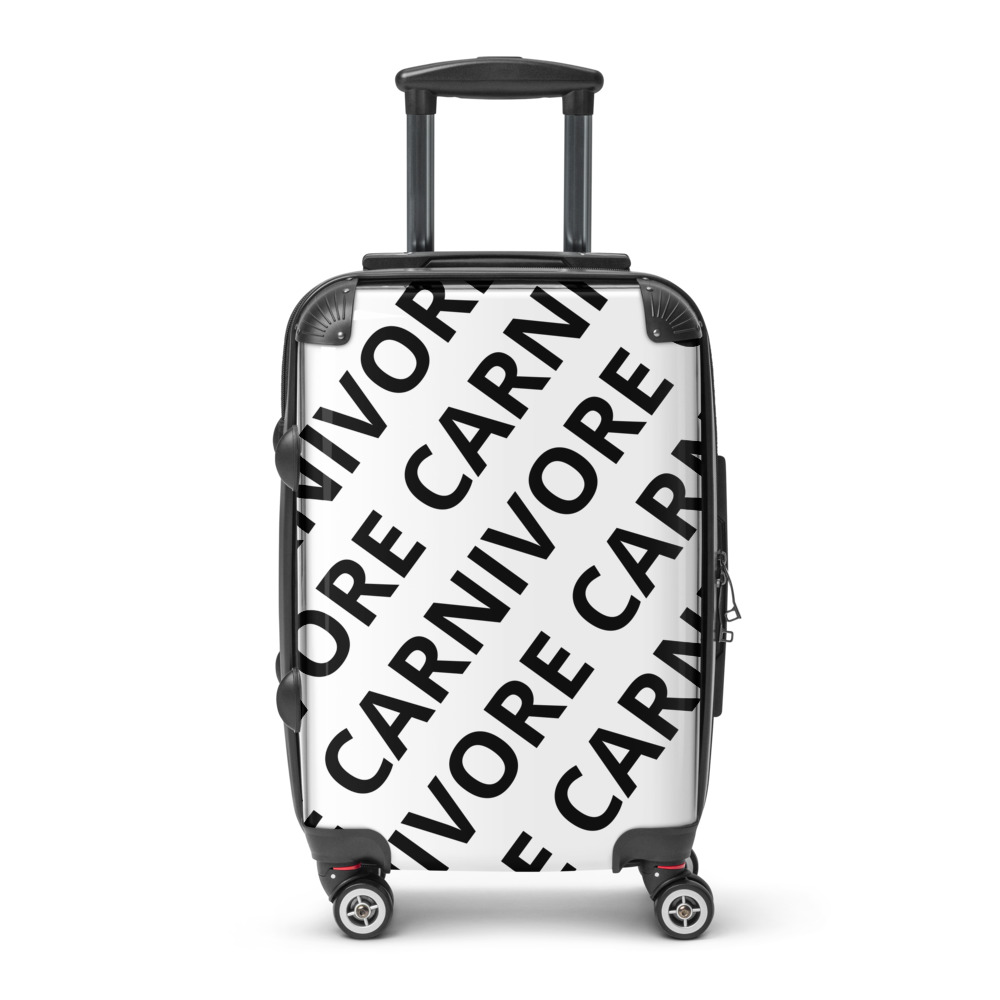
✈️ Travel Smart with the CARNIVORE Suitcase: Beat jet lag with style and functionality. Our CARNIVORE Hard-Shell Carry-On Suitcase is designed for the keto-conscious traveler who needs reliable gear that won’t let them down. The hard-shell construction protects your precious keto snacks and supplements, while the TSA-approved design ensures smooth security checks. No more worrying about your carefully packed keto meals getting crushed or your supplements spilling in transit.
Perfect for: Business travelers, frequent flyers, and anyone who takes their keto lifestyle seriously on the road. The spacious interior accommodates your keto meal prep containers, while the sleek design lets you travel in carnivore style. Annoy the airport vegans while you’re at it—nothing says “I eat real food” quite like a suitcase that proudly declares your dietary choices.
The Bottom Line
Jet lag is more than just feeling tired at the wrong time. It’s a full-body disruption that affects everything from your blood sugar control to your appetite hormones. Your circadian clock doesn’t just tell you when to sleep; it orchestrates a complex metabolic dance that can get seriously out of step when you cross time zones.
The ketogenic diet offers an intriguing solution. By switching your body’s primary fuel source from glucose to fat, keto provides metabolic stability that doesn’t depend on eating at regular times. The appetite-suppressing effects of ketones can help you avoid the hunger chaos that typically comes with jet lag. And the metabolic flexibility you develop on keto means your body becomes better at adapting to changing conditions.
While more research is needed to fully understand how ketogenic diets interact with circadian rhythms, the current evidence suggests that being fat-adapted could be a powerful tool for frequent travellers. Whether you’re a business traveller constantly crossing time zones or planning a once-in-a-lifetime adventure, understanding how jet lag affects your metabolism and how keto might help gives you another strategy for arriving at your destination feeling more like yourself.
The next time you’re planning a big trip, you might want to consider not just what you’ll pack, but how you’ll fuel your body. Getting into ketosis before you travel could be the difference between spending your first few days in a jet-lagged, hangry haze and hitting the ground running. Your circadian clock might still be confused, but at least your metabolism won’t be adding to the chaos.
Bibliography
-
Challet, E. (2019). The circadian regulation of food intake. Nature Reviews Endocrinology. https://www.nature.com/articles/s41574-019-0210-x
-
Dibner, C., Schibler, U., & Albrecht, U. (2010). The mammalian circadian timing system. Annual Review of Physiology. https://pmc.ncbi.nlm.nih.gov/articles/PMC7002226/
-
Gangitano, E., et al. (2021). Chronobiology and Metabolism: Is Ketogenic Diet Able to Influence Circadian Rhythm? Frontiers in Neuroscience. https://pmc.ncbi.nlm.nih.gov/articles/PMC8606558/
-
Grant, C.L., et al. (2017). Circadian system and glucose metabolism. Trends in Endocrinology & Metabolism. https://pmc.ncbi.nlm.nih.gov/articles/PMC4842150/
-
Harvey, C.J.D.C., et al. (2018). The use of nutritional supplements to induce ketosis. PeerJ. https://pmc.ncbi.nlm.nih.gov/articles/PMC6472268/
-
Mason, I.C., et al. (2018). Circadian regulation of glucose, lipid, and energy metabolism in humans. Metabolism. https://pmc.ncbi.nlm.nih.gov/articles/PMC5995632/
-
Mattson, M.P., Longo, V.D., & Harvie, M. (2017). Impact of intermittent fasting on health and disease. Ageing Research Reviews. https://www.sciencedirect.com/science/article/abs/pii/S0963996923003976
-
Paoli, A., et al. (2019). Long-term effects of ketogenic diet on ghrelin and leptin. Nutrients. https://pmc.ncbi.nlm.nih.gov/articles/PMC6722776/
-
Panda, S. (2022). Circadian clock controls rhythms in ketogenesis. PNAS. https://www.pnas.org/doi/10.1073/pnas.2205755119
-
Puchalska, P., & Crawford, P.A. (2022). The therapeutic properties of ketogenic diets and slow-wave sleep. Current Opinion in Endocrinology. https://journals.lww.com/co-endocrinology/fulltext/2021/10000/the_therapeutic_properties_of_ketogenic_diets,.12.aspx
-
Roekenes, J., & Martins, C. (2021). Ketogenic diets and appetite regulation. Current Opinion in Clinical Nutrition & Metabolic Care. https://journals.lww.com/co-clinicalnutrition/Fulltext/2021/07000/Ketogenic_diets_and_appetite_regulation.14.aspx
-
Scheer, F.A., et al. (2022). The circadian regulation of nutrient metabolism in obesity and metabolic disease. Nutrients. https://pubmed.ncbi.nlm.nih.gov/35956312/
-
Signos Health. (2025). Jet Lag and Night Shifts: Effects on Blood Sugar. https://www.signos.com/blog/jet-lag-and-night-shifts
-
Sleep Foundation. (2020). Sleep and Blood Glucose Levels. https://www.sleepfoundation.org/physical-health/sleep-and-blood-glucose-levels
-
Stenvers, D.J., et al. (2019). Circadian clocks and insulin resistance. Nature Reviews Endocrinology. https://www.frontiersin.org/journals/endocrinology/articles/10.3389/fendo.2022.920261/full
-
Stubbs, B.J., et al. (2018). A Ketone Ester Drink Lowers Human Ghrelin and Appetite. Obesity. https://pmc.ncbi.nlm.nih.gov/articles/PMC5813183/
-
Sumithran, P., et al. (2013). Ketosis and appetite-mediating nutrients and hormones after weight loss. European Journal of Clinical Nutrition. https://www.nature.com/articles/ejcn201390
-
Tognini, P., et al. (2017). Distinct circadian signatures in liver and gut clocks revealed by ketogenic diet. Cell Metabolism. https://www.nature.com/articles/nrendo.2017.129
-
Wallace, T.M., & Matthews, D.R. (2020). Metabolic switching and ketosis. Aging. https://pmc.ncbi.nlm.nih.gov/articles/PMC7244089/
-
Wang, S., et al. (2022). Sleep deprivation and central appetite regulation. Nutrients. https://www.mdpi.com/2072-6643/14/24/5196
Photo by Joyce Romero on Unsplash